
Blog › How to Read a Peptide Certificate of Analysis (COA)
How to Read a Peptide Certificate of Analysis (COA)
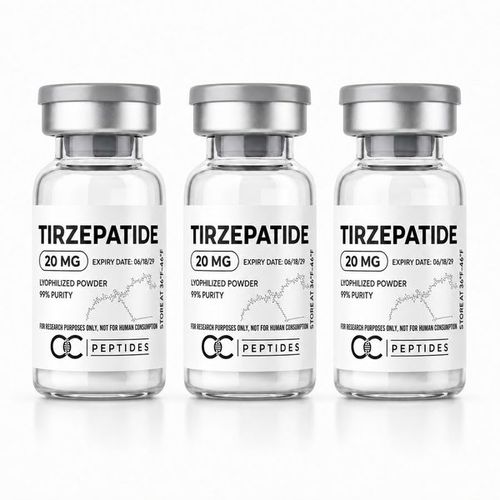
A certificate of analysis (COA) is the quality record for one specific batch of material. For research peptides, it is how a lab confirms that a vial contains the compound on the label, at the purity it needs, before that vial goes into an experiment. Here is what each section of a typical peptide COA means, and the questions worth asking when you read one.
Start with the lot number
Every result on a COA applies to one lot, also called a batch. The lot number on the certificate should match the lot number on your vial. A COA for a different lot tells you how the supplier performed on that batch, not on the material in your hands. When you request a COA from us, include the lot number printed on your vial so we can send the matching document.
HPLC purity: how much of the sample is the target peptide
The headline figure on most peptide COAs comes from reversed-phase high-performance liquid chromatography (RP-HPLC). The sample is passed through a column that separates its components, and a UV detector, usually set at 210 to 220 nm where peptide bonds absorb, records each component as a peak.
Purity is the area of the main peak as a percentage of the total area of all peaks (Bachem). A result of "99.1% by HPLC" means the target peak accounts for 99.1% of the detected material, and the remaining 0.9% is made up of related impurities such as deletion sequences, truncated chains, or oxidized forms.
Two things to keep in mind:
- Look for the chromatogram, not just the number. A trace with one dominant, well-resolved peak supports the purity figure. Method details such as column type, gradient, and detection wavelength give the number context.
- Purity is relative, not absolute. HPLC area percent tells you how clean the peptide is. It does not tell you how many milligrams of peptide are in the vial.
Mass spectrometry: confirming identity
HPLC tells you how pure a sample is. Mass spectrometry (MS) tells you what it is. The COA should list the theoretical molecular weight, calculated from the amino acid sequence, next to the observed molecular weight from the measurement. For standard electrospray (ESI-MS) instruments, a close match, typically within about 1 Da, confirms that the main component is the expected molecule.
This matters because two different compounds can elute at similar times on HPLC. A high purity figure with the wrong mass would mean a clean sample of the wrong compound, so a credible COA reports both tests together.
Net peptide content: purity is not the same as quantity
Lyophilized peptides are not 100% peptide by weight. The powder also holds counterions left over from purification (often trifluoroacetate or acetate), bound water, and trace salts. Net peptide content (NPC) is the percentage of the weighed powder that is actually peptide, and it is usually measured by amino acid analysis or nitrogen analysis (Bachem).
NPC and HPLC purity measure different things. A sample can be 99% pure by HPLC and still be 75% peptide by weight, because the other 25% is counterions and water, not peptide impurities. Not every COA reports NPC, since it requires additional testing. When your protocol depends on exact molar concentrations, it is worth asking whether NPC was measured.
Other fields you may see
- Appearance: usually "white to off-white lyophilized powder." Discoloration or a collapsed, glassy cake is worth noting before use.
- Sequence: the amino acid sequence, sometimes with modifications such as amidation or acetylation. Our research peptide library lists the sequence and CAS number for each compound we carry.
- Test date and laboratory: when the analysis was run and who ran it. Independent third-party testing adds confidence that the results were not produced by the seller alone.
- Additional tests: some certificates include water content, residual solvents, or endotoxin results. These are separate tests, so a COA without them has not necessarily failed them; they simply were not run.
A quick checklist
- Does the lot number match your vial?
- Is HPLC purity reported, ideally with the chromatogram?
- Does the observed mass match the theoretical mass?
- Is the testing laboratory identified?
- If your work needs exact molar amounts, is net peptide content reported?
Using the numbers at the bench
Once you have confirmed identity and purity, the next step is preparing a solution at a known concentration. Our free reconstitution calculator converts vial mg and solvent mL into concentration and the mg held at each 0.1 mL mark. For keeping vials stable before and after reconstitution, see how to store lyophilized peptides.
Every Central Coast Peptides product is third-party tested for identity and purity, and a COA is available to researchers on written request. See our Quality Commitment for how we test, or email Support@centralcoastpeptides.com with your lot number to request a certificate.
All Central Coast Peptides products are sold strictly for laboratory research use. They are not drugs, foods, dietary supplements, or cosmetics, have not been evaluated by the FDA, and are not for human or veterinary use.