
Blog › How to Store Lyophilized Peptides: Temperature, Moisture, and Light
How to Store Lyophilized Peptides: Temperature, Moisture, and Light
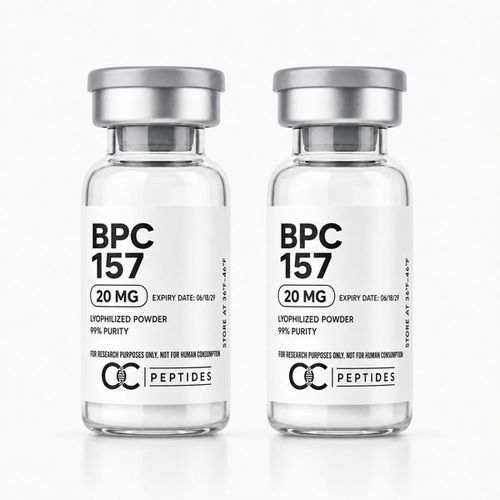
A lyophilized (freeze-dried) peptide is about as stable as a peptide gets. Removing the water slows the chemical reactions that break peptides down, which is why vials can ship at room temperature and arrive intact. That stability depends on how the vial is stored once it reaches your lab. Here is what the major peptide manufacturers recommend.
The three enemies: heat, moisture, and light
Heat speeds up every degradation pathway. Moisture is the bigger threat for dry powder: many peptides are hygroscopic, meaning they pull water from the air, and absorbed water reduces both stability and the effective peptide content of the powder (Bachem). Light can drive oxidation of sensitive residues, so vials should be kept away from bright light (MilliporeSigma).
Lyophilized vials: where to keep them
- On arrival: lyophilized peptides are stable at room temperature for days to weeks, which covers normal shipping (MilliporeSigma).
- Short term: a refrigerator at about 4 °C works for vials you plan to use soon.
- Long term: store at −20 °C or colder. MilliporeSigma and Bachem both describe frozen storage of the dry powder as the most effective way to minimize degradation, with −80 °C preferred where available (MilliporeSigma).
- Always: keep the cap tight, the vial upright, and the box closed to block light.
Peptides that contain cysteine, methionine, or tryptophan are more prone to oxidation, and those containing asparagine or glutamine can have shorter shelf lives (Bachem). If you work with these sequences, colder and darker storage matters more. You can check any compound's sequence in our research peptide library.
Let cold vials warm up before opening
This is the most common handling mistake. When a cold vial comes out of the freezer or refrigerator and is opened right away, moisture in the room air condenses on the cold powder. Both MilliporeSigma and Bachem recommend letting the sealed vial reach room temperature before removing the cap; Bachem recommends doing this in a desiccator (Bachem).
In practice:
- Take the sealed vial out of cold storage.
- Leave it sealed until it reaches room temperature. Small vials usually take 15 to 30 minutes.
- Open it in a dry area, work quickly, and reseal it tightly.
- Return it to cold storage.
Reconstituted solutions
Once a peptide is in solution, its stability drops sharply. Bachem notes that peptides should not be stored long term in solution, and that frozen solutions may be kept for a few weeks (Bachem). General practice:
- Refrigerate solutions in use at 2 to 8 °C and protect them from light.
- For longer holds, split the solution into single-use aliquots and freeze them at −20 °C or colder. Sterile buffers at pH 5 to 6 can extend storage life (MilliporeSigma).
- Avoid repeated freeze-thaw cycles, which degrade peptides in both powder and solution form.
- Label every vial with the compound, concentration, solvent, and date.
Aliquoting starts with knowing your concentration. Our free reconstitution calculator gives the concentration and the mg held at each 0.1 mL mark for any vial size and solvent volume.
Quick reference
- Lyophilized powder: refrigerator (about 4 °C) for the short term; −20 °C or colder for the long term. Warm the sealed vial to room temperature before opening.
- Reconstituted solution: refrigerator (2 to 8 °C) for the short term; frozen single-use aliquots for the long term. Avoid repeated freeze-thaw cycles.
Start with verified material
Good storage protects what is already in the vial. It cannot fix a poor starting material, which is why every Central Coast Peptides lot is third-party tested for identity and purity. See our Quality Commitment, and learn what each line of a certificate means in how to read a peptide COA.
All Central Coast Peptides products are sold strictly for laboratory research use. They are not drugs, foods, dietary supplements, or cosmetics, have not been evaluated by the FDA, and are not for human or veterinary use.